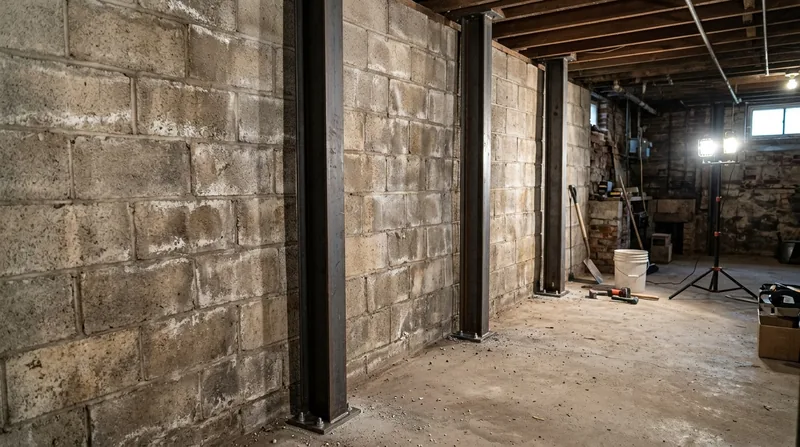




South Bend sits on a thick layer of lake-plain clay and glacial till, and that ground holds spring water like a sponge. Through March and April the water table climbs, and the wet clay pushes hard against the older block and fieldstone basement walls in the Northeast Neighborhood, Sunnymede, and Kern Park. When a wall starts to lean or bow inward, that is not a cosmetic problem; it is a structural warning. Our Bowing Wall Repair in South Bend work is built around stopping that movement before it turns into a collapsed wall and a five-figure excavation. We read the crack pattern, the wall material, and the soil pressure, then match the fix to the severity. If you are seeing a horizontal crack at mid-wall or a wall that has moved off plumb, start with a free basement inspection so we can measure the movement and tell you honestly what it needs.
Why Bowing Walls Are Common in South Bend's Older Basement Stock
The brick bungalows and foursquares of Francis Park and Rum Village were built with block or poured walls that have spent 80 to 100 years holding back wet clay. Add deep frost, lake-effect snow, and repeated freeze-thaw cycles, and hairline cracks open, water gets in, and the pressure builds. A wall that bows inward is usually losing the fight against hydrostatic pressure, not just settling.
- Horizontal cracks at mid-wall signal the wall is being pushed, not just cracked.
- Walls leaning more than an inch off plumb need straps or anchors, not a coat of sealer.
- Efflorescence and white powder at the wall base mean water is moving through the block.
- Sticking doors and uneven floors above the basement often track with wall movement below.
If any of those signs are present, the wall needs structural stabilization, and the water source needs to be managed at the same time. South Bend's building department handles structural repair permits, and rules vary by jurisdiction, so verify the requirements for your address before work starts: City of South Bend.
Key info: A 1920s block wall in Sunnymede that leans two inches inward is a different job from a 1990s poured wall in Granger with a single horizontal crack. We size the repair to the movement, not to a sales script.
How We Stabilize a Bowing Wall in South Bend
We start by measuring the wall, mapping the cracks, and checking the soil and drainage on the outside. Then we pick the method that matches the load: carbon fiber straps for block walls with moderate movement, steel I-beams for heavier loads, and wall anchors when the wall has to be pulled back toward plumb. In most South Bend basements we also address the water driving the pressure, which is why the repair often pairs with an interior drain tile system to relieve the hydrostatic load at the footing.
- We inspect the wall from inside and out and record the amount and direction of movement.
- We identify the water source: gutter discharge, grading, a failed footing drain, or a high water table.
- We install carbon fiber straps, steel beams, or anchors, anchored into the footing and the floor system above.
- We seal active cracks and manage the water so pressure does not rebuild behind the new reinforcement.
- We leave you with a clear record of the movement so future inspections have a baseline.
The goal is a wall that stops moving and a basement that stays dry through the spring thaw, not a patch that hides the problem until next April.
Key info: In a 1950s Mishawaka ranch, we found a block wall bowing inward with a mid-wall crack and a downspout dumping at the corner. Straps stabilized the wall, and extending the downspout and regrading the corner cut the water feeding the pressure.
Bowing Wall Repair Methods We Use in South Bend
No single method fits every wall. The right choice depends on wall material, how far the wall has moved, and how much clay pressure it is holding back. Here is how we match the approach to the job.
| Approach | Description | Best for |
|---|---|---|
| Carbon fiber straps | Straps bonded vertically to the wall and anchored top and bottom to resist further inward movement. | Block walls with moderate bowing and cracks that have not displaced badly. |
| Steel I-beams | Vertical steel beams set against the wall and tied into the footing and floor framing above. | Heavier loads, taller walls, and walls that need positive mechanical restraint. |
| Wall anchors | Anchors driven into stable soil outside and connected through the wall to pull it back toward plumb. | Walls that have leaned or bowed enough that straightening is part of the repair. |
| Crack injection plus drainage | Epoxy or polyurethane injection to seal active cracks, paired with drainage to relieve pressure. | Walls where water is the driver and movement is still minor. |
We tell you plainly when simple crack sealing is enough and when the real problem is hydrostatic pressure that needs a structural fix.
Bowing Wall Repair Cost in South Bend: What to Expect
Most bowing wall repairs in South Bend start around $600 for minor crack sealing and small stabilization work, and climb from there based on wall length, wall material, and how far the wall has moved. A single wall with moderate bowing and carbon fiber straps sits in a very different range than a full wall of steel beams or anchors. Access matters too: a basement wall behind finished framing or mechanicals takes more labor to reach.
We give you a written scope that separates the structural repair from the drainage work, so you can see what each part costs. Get two or three estimates and compare the method, not just the number. You can review typical ranges on our pricing page before you call.
Hiring a Bowing Wall Repair Contractor Near Me in South Bend
Bowing wall repair is structural work, so the contractor matters as much as the method. Ask for proof of licensing and insurance, and confirm the crew doing the work is covered. Get at least two or three written estimates that name the method and the materials. Ask for references from jobs in South Bend or Mishawaka with the same wall type as yours.
Confirm who pulls the permit, since structural foundation repair commonly requires one and the threshold varies by jurisdiction. If your home is in a historic district or an HOA, check those rules before work begins. When you are ready, contact us and we will walk your basement and give you a straight answer.
Bowing Wall Repair Near Me: What South Bend Homeowners Should Know
The most common call we get is a homeowner who noticed a horizontal crack in the spring and wants to know if it is serious. In South Bend's clay soil, a wall that bows inward is usually reacting to water pressure that builds every March and April. The earlier the wall is measured and stabilized, the less work it takes.
We serve South Bend and the surrounding communities, including Mishawaka and Granger, and we treat every wall as its own case. If you are unsure whether your wall needs repair, a free inspection settles it.
Bowing Wall Repair in South Bend: Pricing Guide
| Service | Price | Details |
|---|---|---|
| Minor crack sealing and stabilization | Starting at $600 | Includes cleaning and sealing active cracks plus a movement assessment, with wall length driving the price up |
| Carbon fiber strap installation | Starting at $1,800 | Straps bonded and anchored to resist inward movement; price moves with wall length and number of straps |
| Steel I-beam or wall anchor system | On estimate | Heavier structural restraint needs an on-site look at wall material, movement, and soil load before pricing |
| Drainage relief paired with repair | On estimate | Interior drain tile or exterior drainage to cut hydrostatic pressure, scoped separately from the structural work |
| Travel | Included | In South Bend and surrounding areas, no separate call-out or mileage fee |
| Estimate | Free | Response within 24h at (574) 800-3811, no obligation to book |
Indicative pricing, the exact cost depends on square footage, finish, and site access. Free personalized estimate within 24h at (574) 800-3811.


