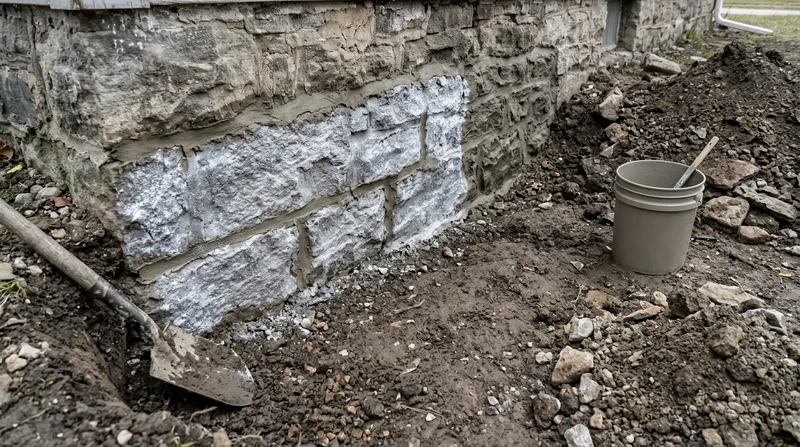




Foundation waterproofing in South Bend starts with one honest fact: most of this city sits on lake-plain clay and glacial till that holds spring water and drains slowly. That means the water table climbs through March and April, and a 1920s bungalow in Sunnymede or a poured-concrete ranch in Mishawaka can take on water through the same hairline cracks year after year. We work below grade only, on fieldstone, block, and early poured foundations, matching the repair to what your wall is actually made of. If you are seeing efflorescence, wall seepage after rain, or a musty smell in the basement, the cause is usually pressure, not a single bad crack. Start with a free basement inspection so we can tell you plainly what you are dealing with.
Why Foundation Waterproofing Matters in South Bend's Clay and Frost
South Bend winters bring deep frost, lake-effect snow, and repeated freeze-thaw cycles. That cycle opens hairline cracks in poured walls and works mortar joints loose in old block and fieldstone. When the spring thaw arrives, the clay is still tight, the water table rises, and hydrostatic pressure pushes water through every gap it can find. The failure mode that dominates here is not a sudden flood but slow, pressure-driven seepage that shows up every March.
- Glacial clay soil drains slowly, so water sits against the foundation instead of running away.
- Freeze-thaw cycles widen existing cracks in block and early poured walls a little more each winter.
- Old footing drains in pre-1940 homes are often collapsed or clogged with roots and silt.
- Downspouts that dump next to the wall load the soil right at the footing line.
None of these problems fix themselves, and sealing the inside face of a wet wall without addressing the water source just traps moisture behind the coating.
Key info: A foursquare in the Northeast Neighborhood with a fieldstone foundation needs different treatment than a 1990s Granger subdivision with a poured full basement. Parging and crystalline treatment suit the old stone; membrane and drainage correction suit the poured wall. We match the method to the foundation, not the other way around.
Permits for structural foundation repair and for work that alters drainage or the sanitary connection of a sump discharge vary by jurisdiction, so always verify with the local building department before work begins. You can review Indiana's contractor and licensing resources through the Indiana Professional Licensing Agency.
How We Waterproof a Foundation in South Bend, Step by Step
We start by reading the wall and the water. That means checking crack orientation, efflorescence patterns, and where the water table sits relative to your footing drain. From there we choose between crack injection, surface treatment, and drainage correction, and we tell you when simple crack sealing is enough and when the real problem is hydrostatic pressure that needs an interior perimeter drain.
- We inspect the basement and the exterior grading, then map where water is entering and why.
- We clean and prep the wall surface, removing loose parging and old failed coatings.
- We inject active cracks with epoxy or polyurethane through injection ports, chosen by whether the crack is structural or still moving.
- We apply parging, membrane, or crystalline treatment matched to block, fieldstone, or poured concrete.
- We correct drainage with downspout extensions, grading, and footing drain or interior drain tile work where pressure demands it.
- We test with water and walk you through what we did and what to watch for next spring.
Every step is documented, and we do not sell a drainage system when a properly injected crack will hold.
Key info: A Rum Village brick colonial we worked on had a hairline crack that wept every April. Polyurethane injection stopped that crack in a single visit. A Francis Park cottage with water across the whole floor needed an interior drain tile system instead, because the pressure was coming from the entire footing line, not one crack.
Foundation Waterproofing Methods We Use in South Bend
The right method depends on wall material, crack activity, and how much water the soil is holding. This table shows how we match the approach to the foundation type we find in South Bend homes.
| Approach | Description | Best for |
|---|---|---|
| Epoxy injection | Structural repair that bonds crack faces back together and restores wall strength. | Stable, non-leaking structural cracks in poured walls. |
| Polyurethane injection | Flexible foam that fills and seals active leaks and expands into wet cracks. | Actively weeping cracks and cold joints. |
| Parging and crystalline treatment | Surface repair and crystallization that block water in masonry and stone. | Fieldstone and block foundations in pre-1940 homes. |
| Membrane and dimple board | Exterior waterproof barrier that stops water before it reaches the wall. | Poured walls with broad seepage and accessible exterior. |
| Drainage correction | Footing drain or interior perimeter drain work that relieves hydrostatic pressure. | Water across the floor and failed weeping tile. |
We choose the least invasive method that actually solves the problem, and we tell you when a simpler repair is the right call.
Foundation Waterproofing Cost in South Bend: What to Expect
Most foundation waterproofing projects in South Bend start around $3,500 and move up from there. That starting figure typically covers a focused repair such as crack injection and surface treatment on an accessible wall. The price climbs with foundation type, the number of cracks, whether we are working on fieldstone that needs full parging, and whether drainage correction is required.
- Foundation material drives cost: fieldstone and old block take more labor than poured concrete.
- Access matters: a wall behind a finished basement or a tight side yard adds time.
- Water pressure tells the story: a single crack is cheaper than a full perimeter drainage correction.
- Exterior excavation costs more than interior work, which is why we recommend interior drain tile when it will do the job.
Get two or three written estimates and compare what is actually included, not just the bottom line. Our full breakdown is on the pricing page.
Hiring a Foundation Waterproofing Contractor Near Me in South Bend
Ask for proof of licensing and insurance before anyone touches your foundation, and get a certificate of coverage on request. Ask how many South Bend basements the contractor has worked on and whether they have handled fieldstone, because old stone behaves nothing like poured concrete. Check references, and confirm who pulls the permit if structural repair or drainage alteration is involved.
- Confirm the contractor is licensed and insured and can show a certificate.
- Get two or three estimates and compare scope, not just price.
- Ask for local references on the same foundation type as yours.
- Clarify permit responsibility with the local building department before work starts.
When you are ready to talk through your basement, reach out through our contact page and we will schedule a free inspection.
Foundation Waterproofing in South Bend: Pricing Guide
| Service | Price | Details |
|---|---|---|
| Crack injection (epoxy or polyurethane) | Starting at $3,500 | Includes crack prep, injection ports, and sealing; price rises with crack count and wall access |
| Parging and surface treatment | Starting at $4,200 | Covers fieldstone or block wall prep and parging; moves up with wall length and finish condition |
| Exterior membrane and drainage correction | On estimate | Requires on-site look at excavation access, footing drain condition, and wall type |
| Travel | Included | In South Bend and surrounding areas, no separate call-out or mileage fee |
| Estimate | Free | Response within 24h at (574) 800-3811, no obligation to book |
Indicative pricing, the exact cost depends on square footage, finish, and site access. Free personalized estimate within 24h at (574) 800-3811.


