What Is Lake Plain Clay and Why Does It Matter in South Bend?
If you live in South Bend, your home sits on ground shaped by ancient glacial lakes. As those lakes receded thousands of years ago, they left behind thick deposits of fine-grained sediment known as lake plain clay. This soil is dense, sticky when wet, and rock-hard when dry. It is also the root cause of many foundation problems in the region.
Lake plain clay foundation issues are common throughout northern Indiana because the clay expands and contracts dramatically with moisture changes. During wet seasons, the clay absorbs water and swells, pushing against your foundation walls. In dry summers, it shrinks and pulls away, leaving gaps that allow water to penetrate. This constant cycle of Foundation Waterproofing challenges is what makes Indiana soil movement so destructive to basements and crawl spaces.
How Clay Soil Causes South Bend Foundation Cracks
When lake plain clay expands, it exerts tremendous pressure on foundation walls. Most residential foundations are designed to handle some lateral load, but the repeated swelling and shrinking of clay soil can exceed those limits over time. Hairline cracks appear first, often near corners or along mortar joints. If left unaddressed, these cracks widen and become pathways for water.
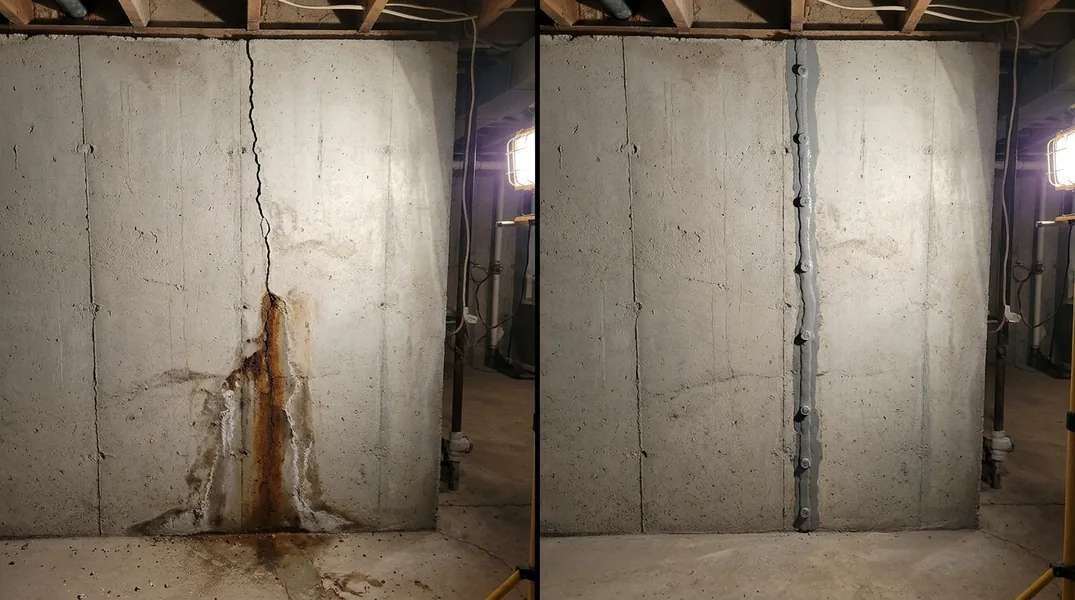
South Bend foundation cracks are not just a cosmetic issue. They signal that your foundation is under stress from Indiana soil movement. In many cases, homeowners notice cracks in the basement walls or floors and assume they are harmless. However, even small cracks can let in moisture, leading to mold, musty odors, and structural deterioration. Recognizing the signs early is key to avoiding costly repairs down the road.
Why Basements Leak in Clay Soil Areas
Clay soil basement leaks happen because clay does not drain well. When it rains, water pools on the surface instead of soaking in. That water then finds its way to your foundation through cracks, gaps, and porous concrete. Over time, hydrostatic pressure builds up behind your basement walls, forcing water through even the smallest openings.
In Mishawaka and other nearby communities, the same clay soil conditions apply. Homeowners often notice water seeping in after heavy rain or during spring thaw. This is a classic sign of Basement Waterproofing problems related to clay soil. Without proper drainage and waterproofing, the cycle will continue and worsen.
Basement Waterproofing Near Me: When to Call a Professional
If you are seeing water stains, efflorescence (white powdery deposits), or cracks in your basement walls, it is time to call a professional. DIY fixes like hydraulic cement or sealants may provide temporary relief, but they do not address the underlying issue: water pressure from clay soil. A trained contractor can assess your situation and recommend the right solution, whether it is an Interior Drain Tile System or Exterior Basement Waterproofing.
Homeowners in Granger and Osceola face similar challenges. A professional evaluation will identify the source of the leak and propose a lasting fix. Do not wait until small cracks become major structural problems. Call South Bend Waterproofing at (574) 800-3811 for a free estimate and peace of mind.
Solutions for Clay Soil Foundation Problems
There are several effective strategies for managing lake plain clay foundation issues. Interior drain tile systems capture water before it reaches your basement floor and redirect it to a sump pump. Exterior waterproofing involves excavating around the foundation, applying a waterproof membrane, and installing drainage to keep water away from the walls. Both approaches address the unique challenges of clay soil.
In some cases, foundation repair may be necessary to stabilize walls that have moved. This could include carbon fiber straps, wall anchors, or piering. The right solution depends on the severity of the problem and your home's specific construction. A qualified contractor can walk you through the options and help you choose the most cost-effective approach.
Basement Waterproofing Cost in South Bend: What to Budget
The cost of basement waterproofing in South Bend varies based on the size of your basement, the extent of the damage, and the method used. Interior drain tile systems are often more affordable than exterior excavation, but exterior waterproofing may be necessary for severe cases. Most homeowners can expect to invest a few thousand dollars for basic waterproofing, with costs increasing for more complex repairs.
It is important to get a detailed pricing estimate from a reputable contractor. Avoid companies that provide vague quotes or pressure you into immediate decisions. A thorough inspection should include an assessment of your soil conditions, foundation integrity, and drainage patterns. South Bend Waterproofing offers transparent pricing and no-obligation estimates, so you can plan your project with confidence.
Looking for a professional basement waterproofing contractor in South Bend? South Bend Waterproofing responds fast for all your basement waterproofing needs.
Get a Free QuoteOur services: Basement Waterproofing · Interior Drain Tile System · Exterior Basement Waterproofing