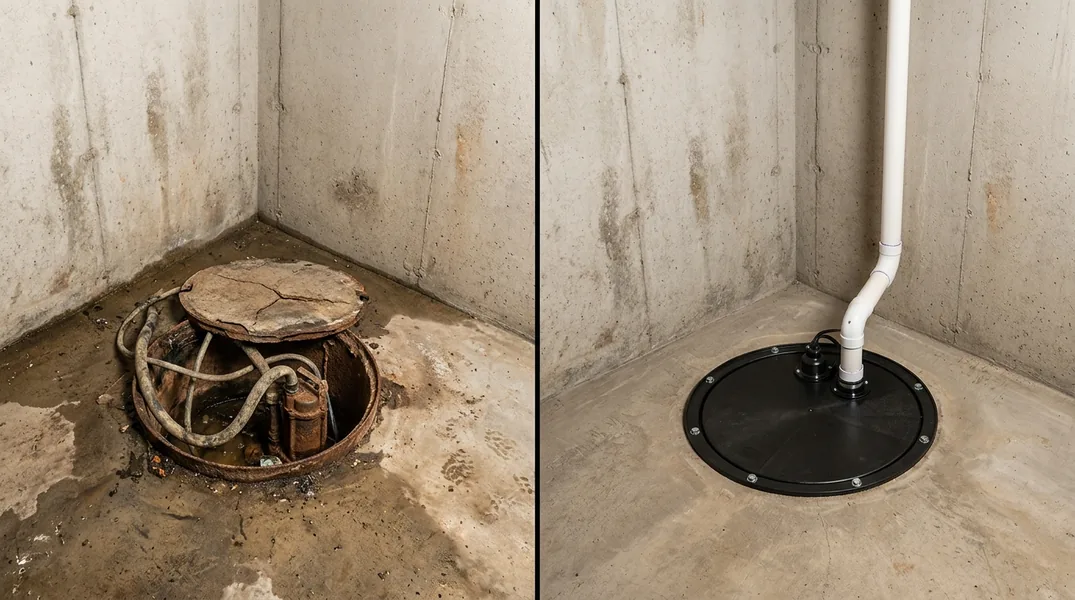
Why Spring Runoff Puts Your Sump Pump to the Test
Spring in northern Indiana is a season of thawing snow, saturated soil, and frequent rain. As the ground warms and the frost layer disappears, water that was locked in the soil all winter begins to move. That water finds its way toward foundations, and for most homes in South Bend, the sump pump is the last line of defense against a flooded basement. A pump that sat idle for months can fail right when you need it most, which is why a little maintenance before the spring melt is one of the smartest things a homeowner can do.
The challenge is that sump pumps are out of sight and out of mind. They run quietly in a pit, and when they work, you never think about them. But mechanical systems degrade over time. Float switches stick, impellers clog with sediment, and discharge lines freeze or crack. By the time you notice water on the floor, the damage is already done. Taking an afternoon to inspect and test your system in late winter gives you confidence that the next heavy rain won't turn into an insurance claim.
Sump Pump Maintenance Checklist Before the Thaw
Start by unplugging the pump and removing the lid from the sump pit. Look inside for debris, silt, or gravel that could clog the intake. If the pit is dirty, clean it out and make sure the pump sits level on a solid surface. Next, check the float switch by lifting it manually. You should hear a clear click as it activates. If the switch feels sticky or doesn't click, replace it before spring. A float that fails to trigger during a storm is one of the most common reasons basements flood.
Test the pump by pouring a bucket of water into the pit until the float rises and the pump kicks on. Watch how quickly the water level drops and listen for any grinding or rattling sounds. A healthy pump moves water fast and runs smoothly. While you're at it, inspect the discharge line for cracks, loose connections, or signs of freezing. The line should slope away from the foundation and end at a point where water can drain freely, at least a few feet from the house. If you're not comfortable doing this yourself, a professional can handle the inspection and point out issues you might miss.
Don't Skip the Sump Pump Check Valve
The sump pump check valve is a small but critical component that prevents water from flowing back into the pit after the pump shuts off. Without a working check valve, every cycle sends water back down the discharge line, forcing the pump to work harder and run more often. That extra strain shortens the pump's life and can leave standing water in the pit. During spring runoff, when the pump cycles frequently, a faulty check valve can turn a manageable situation into a flooded basement.
Inspect the check valve for mineral buildup, cracks, or a weak flapper. If it's more than a few years old or you hear water gurgling back into the pit after the pump stops, replace it. The part is inexpensive and the installation is straightforward, but it makes a real difference in how efficiently your system handles storm water. While you're checking the valve, confirm that the discharge line is properly secured and that the check valve is installed in the correct orientation. A valve installed backwards will block water entirely, which is a recipe for disaster during a heavy rain.
Battery Backup Sump Pump: Your Safety Net During Storms
Spring storms in northern Indiana often come with power outages. A primary sump pump that relies on grid electricity is useless when the lights go out, and that's exactly when water is most likely to be pouring into your pit. A battery backup sump pump runs on a charged battery and kicks in automatically when the primary pump fails or the power drops. It won't run indefinitely, but it can keep your basement dry through the worst of a storm until power returns or you can take further action.
If you already have a backup system, test it before spring. Most units have a test button or a float you can lift to simulate a power failure. Check the battery terminals for corrosion and make sure the battery holds a charge. Batteries typically last three to five years, so if yours is older, replace it now rather than discovering it's dead during a downpour. If you don't have a backup pump, this is the year to install one. The cost is modest compared to the expense of water damage, and it gives you peace of mind every time the forecast calls for heavy rain.
When to Call a Pro for Sump Pump Help Near Me
Some maintenance tasks are easy for a handy homeowner, but others are better left to a professional. If your pump runs constantly, cycles on and off every few seconds, or fails to move water at all, there may be a deeper issue with the pump, the pit, or your home's drainage system. Persistent problems often point to a need for Basement Waterproofing improvements, such as an Interior Drain Tile System that directs water to the pit more efficiently. In some cases, the solution involves Exterior Basement Waterproofing to keep water from reaching the foundation in the first place.
If you live in Mishawaka, Granger, or Osceola, the same spring runoff challenges apply. A local waterproofing contractor can assess your sump pump, check valve, and backup system, and recommend the right repairs or upgrades. They can also evaluate your foundation and drainage to make sure your basement is ready for the season. If you're unsure whether your system is up to the task, it's worth getting a professional opinion before the first big storm hits.
Get Your Sump Pump Ready for Spring
Spring runoff is predictable, but basement flooding doesn't have to be. A few hours of maintenance now can save you thousands of dollars in repairs later. Test your pump, clean the pit, check the check valve, and make sure your battery backup is charged and ready. If you'd rather have a professional handle the inspection or you need help with repairs or upgrades, contact South Bend Waterproofing at (574) 800-3811. We serve homeowners throughout the South Bend area and can help you get your basement ready for whatever the spring thaw brings.
Looking for a professional basement waterproofing contractor in South Bend? South Bend Waterproofing responds fast for all your basement waterproofing needs.
Get a Free QuoteOur services: Basement Waterproofing · Interior Drain Tile System · Exterior Basement Waterproofing